
by Tom Evans | Jun 18, 2023 | Expanding
So our three month temporary rental has come to an end and we are now in the moho for the rest of Spring, all of Summer and we hope just the start of Autumn. The photo above is going to be our main location – one, cos of the view and two, as it is 3 mins drive to our house.
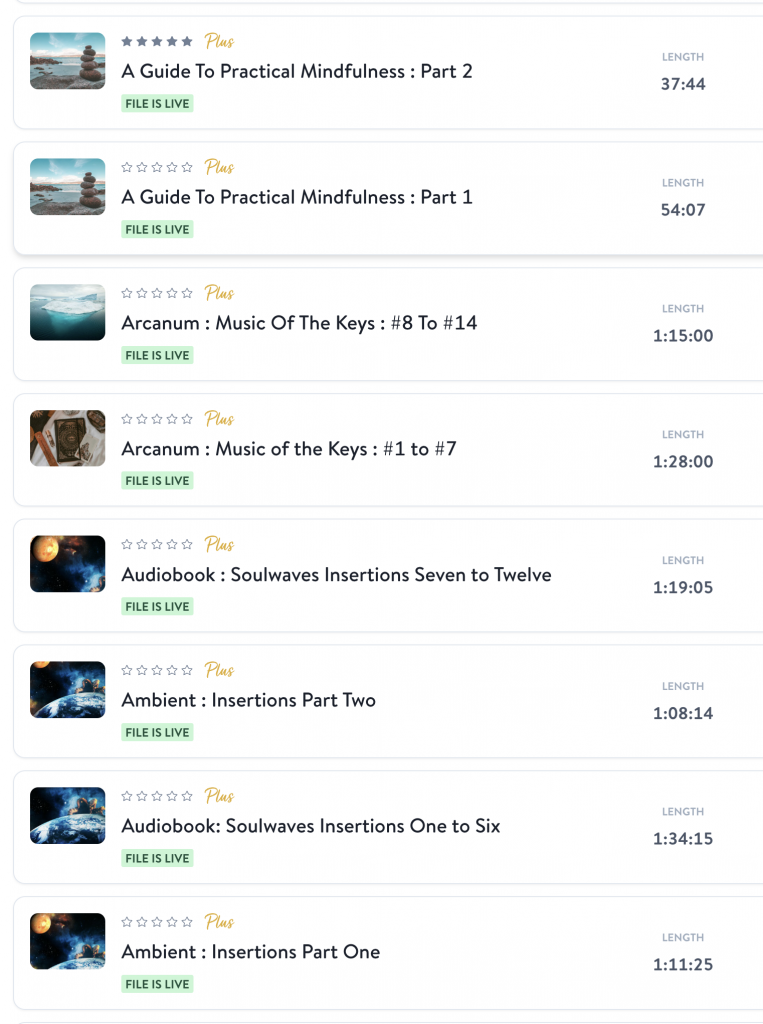
In other news, my audio studio has been reinstated which means that, at weekends I can record stuff (as no building work) and in the week write new stuff and edit old stuff. This is just perfect as I can keep the Overstanding project plate spinning. Also, Insight Timer are just on the cusp of launching ad hoc Premium content. You have to search for it at the mo but our profiles will be updated over June so it’s findable. I am in the beta release so have 8 tracks uploaded already see below.
It’s also inspired me to start a project I have had in mind for many years. One of my inspirations for my novel Soulwaves was Douglas Adams’ Hitchhiker’s Guide to the Galaxy. While not as funny as ‘The Guide’, the observant amongst you will spot the references, like Deep Thought and the teleporting dolphins.
To this day, the original radio show is by far the best version – better than the book, TV show or film.
In lockdown, inspired by the novel Soulwaves, I composed an album of ambient music to augment the book. Now is the time to merge the audiobook and album into a mullti-part ‘meditale’ … streaming soon exclusively via Insight Timer Premium. Watch and listen to this ‘space-time’.

by Tom Evans | May 19, 2023 | Expanding, Illuminating
When it comes time for extending yourself massively, you really need a strong support behind and underneath you.
Again, life is mirroring my art. In my metaphysical serialisation, the Path to Overstanding, the flavour of thought of extension features highly, as those walking the path with me expand their awareness and consciousness.
By way of physical contrast, piles have been sunk down by six metres and a massive steel frame is now sitting on top of them, poised to support our new ‘living space’.
In the front garden, a large hole has been dug to accommodate a 5000 litre rainwater harvesting tank. It is insurance against a warming planet to ensure we can water the garden and flush toilets.
Adding to all of this, at the end of the month of May, I am steeling myself to living in the motorhome for four to five months. To make this more palatable, we’ve acquired an air awning to give us extra space to hang out.
For most of this period, we will be close to our house so we can monitor progress. Most importantly, I’ll have my audio studio back in action so I can continue content creation. I am also hoping to get some reading and writing done. New locations often inspire new directions and openings.
On this front much is happening each month (and moonth) :
- I write a daily Just for Today, inspired by the amazing artwork of Siri Opli
- this gives me the script for the following month’s meditation which I upload for free on Insight Timer
- where, shortly a huge archive of my back catalogue will be published under the new Insight Premium offering
- I also try and upload a new ambient track each month but have held back on any Live events until the Autumn
- in parallel with all of this, and sync’ed to the Moon Phases, I create four new assets for the Path to Overstanding – namely serialisation of the book, a meditation on a key, music inspired by the keys and an uberstanding conversation
All in all, a busy year and one that I am steeled for …

by Tom Evans | Apr 19, 2023 | Expanding, Timing
We are well into the house refurbishment now. Walls are demolished, floor ripped up, 200 tonnes of soil removed for new parking area and piles driven 6 metres into the ground to support the new 1st floor extension where it meets the garden.
So, we cannot go back. We are temporarily in rented accommodation until the end of Spring and will then spend Summer in our motorhome. We are well passed the point of no return and have no option but complete the build.
For some this would be a scary place to be. Apart from anything, there’s a considerable amount of investment required and the classic wanting to be back in before the winter sets in.
Lady Luck however seems to be on our side. The short term rental property was an amazing stroke of luck. There are not many places available that are happy to have two dogs and where you can park a motorhome and two cars.
Our builders seem to know what they are doing and are hitting all the deadlines. Problems like getting steels past high voltage overhead electricity lines are being dealt with.
Going passed the point of no return needs more than having deep enough pockets and a large amount of patience. It requires that we trust. This is not trust in a our main contractor or the plumber. It is about trusting the Universe that all of this is part of a bigger plan. This is the karmic plan we signed up for before incarnating. Demolishing and rebuilding a house that is more energy efficient is only of any worth if living in such a place means even more of the karmic plan can be fulfilled.
Part of this is the wisdom and higher perspective that is gained by upsetting the apple cart, living in a new place and meeting new people. Having temporarily decimated a home, it means our place of bliss has been removed. When we eventually get back in, we will appreciate it even more.
In the meantime, in the limbo place from which we cannot go backwards, much adventure can be had. We have a moho and plan to use it. For example, we are a stone’s throw from Stonehenge and have discovered we can park there for free overnight and see the sun rise over the stones.
So what is the real point of ‘the point of no return’?
It is when the realisation dawns that going back and regressing to old ways and patterns serves no purpose. The learnings are not forgotten but embraced, appreciated and integrated. This opens the door to new potentialities and possibilities.
When a new sun comes up, a new day begins, the past becomes a thing of the past and we rise to a bright new future … to help with the ‘returning’ process, treat yourself to an hour of reflection listening to my longest guided meditation, The Paths of Return.
And you can find the script of this guidance in this blog …
by Tom Evans | Mar 21, 2023 | Expanding
 It always amuses me how life emulates art, and vice versa.
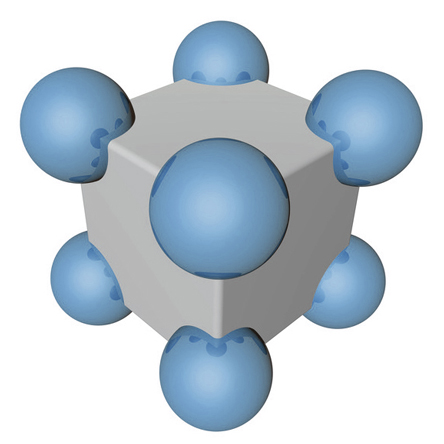
Artistically right now, I am taking an old structure and giving it a makeover. Well over 12 years ago, I created the Cube of Karma, inspired by the ancient glyph of the Cube of Space. Since January this year, I have dusted it off and it’s being given a new lease of life – with new features and a new outlook. I am realising that I have only just touched on its potential as a tool for human enlightenment and spiritual evolution.
At the same time, I have ditched the old subscription model, simplified my e-commerce and CRM systems and it is now available for a one-off investment.
Find out more details on my home page …
I’ve done the same with all my Soulwaves materials – a project I will revisit and augment in 2024.
Here’s where to get the Soulwaves package …
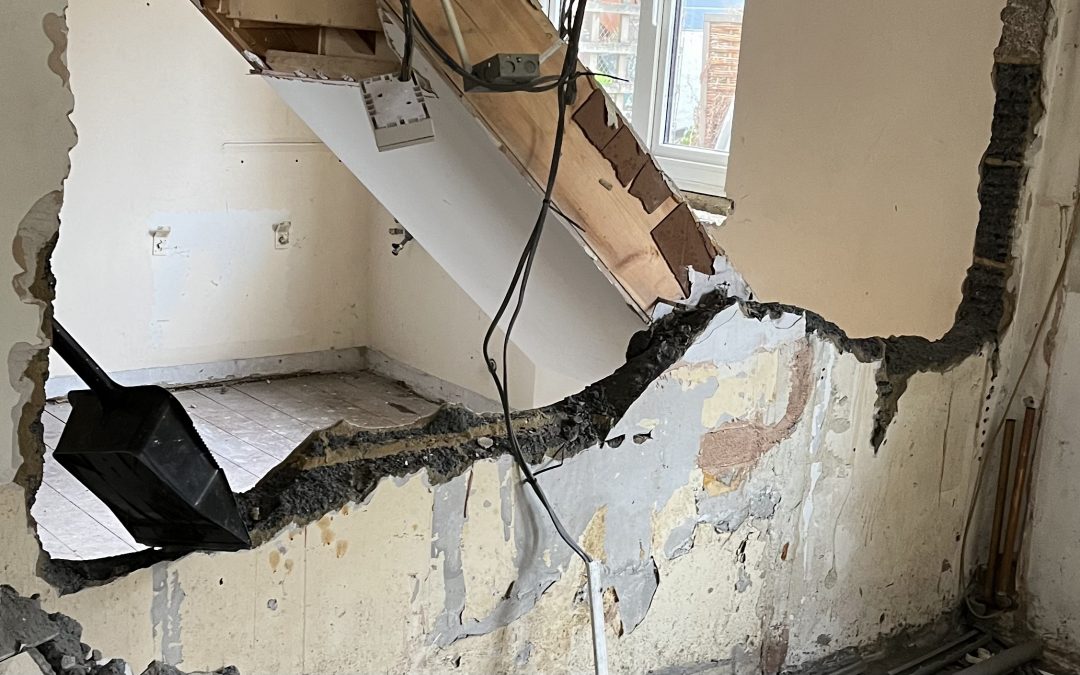
 Life-wise, our tired 1960s bungalow has now been stripped back to a shell.
This is a precursor to completely sealing it as an airtight box so it can become a low-energy eco-home. Bizarrely, or not, it looks like our 1st eco-home is being sold too which very conveniently funds the ‘eco-isation’ of the current house – a kind of ‘house karma’.
Externally to this art-life duality, Insight Timer are expanding the scope of their premium offering which means I can at last upload loads of long-format material. I have been asking them to do since I became a guide on the app back in 2016. This allows me to downsize on my own off-app hosting of materials. In turn, this means I can narrow my focus and produce more with less time and at reduced expenditure.
Here’s just a sample from my archive which awaiting publication once the feature is released – which is imminent.


by Tom Evans | Feb 20, 2023 | Expanding
 This New Moon augurs in several new moves.
The most impactful on the surface is moving out of our new home into rental so that it can be made into an energy efficient eco-home. So this week is packing and transition.
We are lucky, or have made our luck, that the builder who walked into our world has a property only 30 minutes drive away that we can rent short term. It’s got a nicely fenced off garden for the dogs and parking for our moho at the front of the house.
We’ve got at least three months guaranteed on the rental, potentially then some moho adventures but then the option of living back on site in the moho for 1st and 2nd fix.
Now this might sound like enough to be getting on with this year but it’s really a background project while the ‘real work’ is going on.
 The Cube of Overstanding
This New Moon sees the delivery of the second module in a 12 moonth series of awakenings based around the Cube of Space. It’s been something I have sat on for over a decade, if not several life times. Needless to say, I am both excited and in a little trepidation about what will unfold.
This is the real work in hand and in progress!
It offers the most amazing ability to help people evolve to a new level of consciousness which augurs in a new way of being for individuals and humanity as a whole. Bearing in mind too that this triggers and upgrade to the whole biosphere and even the consciousness of Mother Earth.
Is this too fanciful a postulation? Is is the ramblings of someone who has lost their marbles? Or are you intrigued enough to dive in?
Join Me Live
On the last Friday of each month, I am hosting a free meditalk on Insight Timer Live. The next one is all about the Twelve Councillors of the Light and is on Friday 24th Feb at 2pm UK Time.
On and around the 3rd Moon Quarter of each moonth, I am also hosting a live coaching and mentoring session for those walking, or thinking of walking, the Path to Overstanding with me – register here
by Tom Evans | Jan 21, 2023 | Expanding
Another Turn of the Wheel
It’s fair to say the last three orbits of the Sun have been interesting for humanity. We’ve had two years of global pandemic and a year where the prospect of WW111 has raised its head. In the UK, we’ve seen the worst excesses of an incompetent and corrupt so-called government play out.
Of course, while all this doom and gloom might sound terrible and as if the world is about to end, we should realise that cosmic forces are playing out and influencing affairs on our planet.
While some of the world is in turmoil, it has also shown the best side of humanity. In all probability, the UK Tory government has engineered its own oblivion. Regime change will see an end to hostility between Russia and Ukraine. Do not forget of course other areas of tension and conflict too. The threat of global climate change being one of them.
So what can we do as individuals to help turn the tide. Well, my mission to help get the whole world meditating, one person at a time – with the help of Insight Timer, continues.
With this in mind, I have a whole year of meditations, ambience and courses planned for release, as we orbit our home star once more. There will be at least one new meditation and one new ambient track available to listen to free each month. I also plan to release at least three new courses, one every three months, which are available to Insight Timer Premium subscribers.
By way of example, just this month, I’ve published these already …
The Cube of Space
I am also extending the materials for the Path to Overstanding. This year we will be exploring a glyph called the Cube of Space – it is like a software upgrade for the soul and some even call it “a death-less reincarnation”.
Note there is no fear-based New Year sale, just maintenance of last year’s prices. It is mindfully and soulfully designed to be an investment affordable to as many people as possible at less than the price of a takeaway pizza a month. This year it will include live ‘moonthly’ group mentoring sessions for those walking the Path or considering embarking upon it – they are called Uberstandings.
Note that you can also take the first step on the Path to Overstanding for free.
Talking of extensions, we are also extending our house and, at the same time making, it as eco-friendly as possible. While doing this is of course introspective, we also want to share our experience of how to restore old, tired, mouldy and cold housing stock.
So this year’s blogs will document my journey and include a mix of how the house refurbishment is going along and an update on progress on the ongoing construction of my metaphorical ‘house of enlightenment’.
I guess I have literally become a builder of the new Adytum – which is one reason I had to unsubscribe as a student of BOTA so I would not plagiarise their materials. My aim remains the same – to take what has been made esoteric (and difficult to understand) and make it exoteric (both accessible and practical in its application).
Onwards and Upwards …

by Tom Evans | Dec 23, 2022 | Chatting, Expanding

RIP Reuben
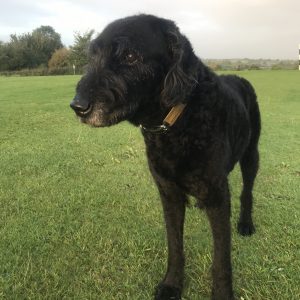
At the start of this year, we had to say goodbye to our labradoodle Reuben. At 15, his legs gave up on him and we did the thing that all dog owners dread. I was with him as we let him go and told him that we’d see him again soon.
He was a rescue dog who hadn‘t been treated that well. As a result, he was timid but very affectionate and, like all dogs, a little naughty from time to time. He moved silently and stole socks and underwear, attracted by the smell no doubt. He would always be a step or two behind on a walk, leaving the introduction to other dogs to one of his braver companions like Wellington or more latterly, Millie.
For the last 10 months, Millie has enjoyed being the sole centre of attention. We are planning a major house renovation next year and living in our motorhome for nine months or so. So having one, well trained dog seemed like a good idea.
The Universe and soul of Reuben obviously had other plans. My better half wasn’t seriously looking but had an alert out for small, black, male labradoodles. These are Millie’s favourites as she can boss them around.
When a dog reincarnates, as for humans, it knows its soul path and what it wants in life and what it wants to learn. So Reuben liked us and our home and wanted to come back to be brave and adventurous. He’d had enough of being mistreated and had much to give.
So, six months ago, he came back as the progeny of a female golden retriever and small male poodle. This would guarantee he would be the right size to be Millie’s companion again. He even came back with the name of Lucifer, the light shower and change bringer, to make a point. We thought Pickle was a safer name to shout as we walk him past the local church.

Welcome Pickle
His first homing wasn’t right so he managed to nudge the mind of his owner to put him up for rescue. He ended up in a caring home but his new doggie companion was nervous about living with such a ball of energy, so he was put up again for rehoming.
This time, he hit the jackpot. His owner from his previous life spotted him and within a few days, he ended up where he planned to be all along. Dogs know a thing or two.
He slotted straight in and relaxed straight away. He learned that a grumble from Millie was a nudge to back off. He worked out how to wrap his new owners around his paws and do his every bidding. He had come home and was looking forward to another life of adventure and experience.
by Tom Evans | Nov 25, 2022 | Chatting, Scribing
The Cycles of Life
So this week was the first moonth in many years that I missed publishing a blog on the New Moon. This is just a couple of days late.
There is no particular reason but that I forgot but that I forgot as external events overtook my usual rhythm of creative production.
I had to take a few days out last week at the funeral of an old friend from University. He had been dying for sometime and he very bravely and candidly wrote about it. Actually with the slightest nudge from me, he produced three books of philosophy and poetry in his last two years of life. They are linked from the images above, all thoughts from a dying tosser.
I had the honour of being able to read one out at his funeral and I share one with you here which is the only one I managed to get him to record.
So this mindfully short blog is dedicated to my good and old friend, Nick John Kyneston Bushell – may your light shine brightly from Above and may you come back down to the Below soon.
by Tom Evans | Oct 25, 2022 | Expanding, Illuminating
This last moonth has been a bit of an eye opener.
I beavered away the moonth before getting four video courses uploaded to Insight Timer (with more lined up in the wings). At last, I thought, I could move the majority of my extensive archive to one place and reduce complexity of hosting – and reach the millions registered with the app. Then I got an email saying they were holding back on video course, workshops and mentoring. Hey ho, I then thought, there must be another way.
So I looked at which of my courses might work as audio only courses, which are still OK, and came across a series of meditations inspired by my book, Soulwaves, originally called The Soul-full Path.
So I remastered it, added a brand new meditation to help your soul actually incarnate and re-entitled it Your Soul Path and uploaded it to the app. Hopefully it will pass muster and be available by the time the Moon orbits the Earth once more.
Any time we work with materials which connect us with our soul, magical and mysterious events can be stirred up in our lives. Sometimes these events are of major significance and sometime they are tiny. Sometimes the mere recognition of them is of deeper and wider import than the happening itself.
So I got the course uploaded the day we went away for a short jaunt in the motorhome to the beautiful Mendip Hills, having got it back again after lending it to a friend in need for a few months, during her house transition. We had to kit out the van again and upon arrival at our overnight stop, we discovered that we didn’t have a teaspoon. We resolved to naughtily purloin one from a coffee shop the next day.
 So we were in Cheddar Gorge sitting down with a latte and hot chocolate. We don’t take sugar but dutifully it arrived along with two teaspoons. Our conscience hit us and we agreed it wasn’t right to steal a spoon.
Now the road through the gorge is closed at the moment while they secure the rock face so we walked up the gorge as far as we could. Bear in mind, no cars are going up there right now, so minimal traffic and footfall.
So blow me down with a feather but on the side of the road, in broad daylight, was a single teaspoon. It was just perfect. So we both removed some litter from the beauty spot and solved our lack of an implement to extract tea bags.
Now admittedly this is a very 1st world problem and, you might say, not worthy of a blog article. I would suggest though that the small miracles are just part of our big miracle of life. Noticing them and thanking your god, your soul, the angels or your dog for leading you there in turn encourages to more and more to unfold.
p.s. After our trip to Cheddar we went to Wells and had the whole world just hanging and spinning in front of us in the Cathedral
by Tom Evans | Sep 25, 2022 | Expanding
My unfolding of the Path to Overstanding materials has led me to return to my study of the Tree of Life. I always found the language around the Kabbalistic tree quite obfuscating. What’s a Sepiroth after all? Of course, this challenge fits into my mission to make such arcane esoteric language into the exoteric and understood.
Naturally, it I benefit greatly from going over old study notes, spotting things I missed and, more importantly, seeing the wisdom contained in such a glyph in a new and overarching context.
For example, the Sepiroth are better described as being emanations. In addition, they are connected to each other by Intelligences, which also map on to the keys of the Major Arcana. The emanations and intelligence are referred to as Paths of Wisdom with which I am not totally comfortable. To me, they only become Paths when combined together, IMHO.
One aspect of the Tree that I am particularly drawn to is the Scintillating Intelligence, which is The Fool in the Tarot. In isolation, it’s one of my favourite cards ranking along with The Hermit and The Hanged Man in the archetype of my world. When I first read about The Fool, I discovered it is also known as Aleph, The Life Breath.
Around the same time the Tarot found me, I had just found out about Core Process which is a way of encapsulating your essence in two words, or so. Mine turned out to be Breathing Life – you have to love a coincidence. I cannot help but breathe life into situations I find myself in and into people I meet who could do with a boost. The Life Breath is of course the chi that keeps us alive and powers our creativity. Using it every day helps us to maintain and even enhance our well being.
What I had either buried, or ignored, is that the Scintillating Intelligence connects the emanation of Kether with that of Chokmah. Kether is the Limitless Light and Chokmah, the knowledge of said Limitless Light.
So operating in this space is pretty special and doubly so when you appreciate that emanations are bidirectional portals. So the knowledge of the Limitless Light trickles down the Tree until it manifests in our physical body and our world of space and time. What we then do with that wisdom goes back up the other way. The Scintillating Intelligence also informs the Limitless Light of what is possible based on its infinite potential.
In microcosm, this could be an idea or a notion, just like this one. In macrocosm, when we return to Source and depart this mortal coil, it could be the realisation of the impact a soul incarnate can achieve in a physical body. This acts as a seed and template to adopt for souls who are about to incarnate. What goes around, comes around.
Armed with this briefest of scintillations, be that change and let me know by way of comment below how your own scintillations are influencing the world and the planes above.
and to take your first step on the Path to Overstanding, visit my home page




 It always amuses me how life emulates art, and vice versa.
 Life-wise, our tired 1960s bungalow has now been stripped back to a shell.


 This New Moon augurs in several new moves.
 The Cube of Overstanding



 The Cube of Space



 So we were in Cheddar Gorge sitting down with a latte and hot chocolate. We don’t take sugar but dutifully it arrived along with two teaspoons. Our conscience hit us and we agreed it wasn’t right to steal a spoon.