It’s natural for us to fear the unknown. Like all fears, this can start at an early age and remain with us for most of our lives.
When it comes to embarking on a creative project – or specifically not-embarking on a creative project – it can be somewhat debilitating.
The signs that this is happening in your life are:
You are a bit of a control freak and won’t start working until you know exactly each step of the way
You spend more time planning than doing
When you start creating, doubts about your ability start to sneak in which you use as excuses to stop
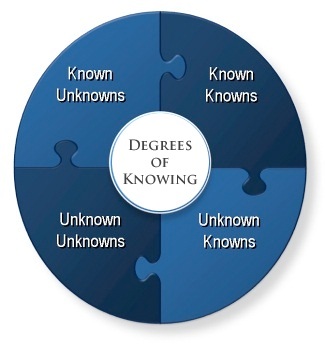
To add more complexity and confusion, there are actually classes of unknown-ness.
There’s obviously the stuff we know we know – the Known Knowns – at least that is until we find out whatever we thought we knew, we didn’t know that well after all.
There’s stuff we know we don’t know – the Known Unknowns – for example, for writers, who is going to publish our bestseller.
There’s a weird category of Unknown Knowns – these are things we know but didn’t know we knew. I love it when authors are actually quite surprised that people like reading their stuff. They were just not be quite aware of it.
Finally there are the Unknown Unknowns – these are the bête noires to creatives – these are the demons that can stop us in our tracks.
Strategies for Getting to Know the Unknowns
1. Just accept we don’t have to know everything and getting to know things, make mistakes is part of the rich tapestry of life
2. Remind yourself that not trying is failure and giving it a go is success
3. Know that all you need to know is to know how to find out someone who does know
4. Learn how to use boolean searches on Google, Twitter and Wikipedia – and if you don’t know what a boolean search is or why they are useful just click here – take this as a tip from a person who knows
6. Write down three things you think you know and three things you think you don’t know – then have a think about them.
7. Learn something new every day, no matter how small – for example, I subscribe to the Words for the Day from Dictionary.com and Visual Thesaurus so each day I improve my vocabulary … details on this blog
Incidentally, I find out daily that words that I thought I knew the meaning of – I really didn’t.
The Known Knowns weren’t quite what I thought they were !!!
The second major block to our creativity is the avoidance of failure. If you don’t actually do anything then you can’t possibly fail.
Job done!
Somewhat ironically, we can be really creative on how we go about this. As for the other types of fears, in nearly all cases, other behaviour masks what is actually occurring.
Typical signs that this fear is in operation include being a ’busy fool’ and finding you are always serving other first before generating our own output.
Low self-esteem and pessimistic tendencies can also come to play. You may also find you give up at the first hurdle and any sign of adversity. You become an expert at creative procrastination.
These are all the tell-tale signs you are avoiding failure.
The route out of this downwards spiral is one of the most satisfying things we can do – we must learn to enjoy being self-indulgent and to put ourselves first. When you do this, you will both earn the respect of the people who you have been serving and show them ways they can do this for themselves whilst also reducing their reliance on you.
These are seven steps to take:
1. Diarise appointments with your Creative Self for your projects
2. Guard them with a passion
3. Share these dates with those that might thwart you by crossing your boundaries
4. Before each Creative session, go for a walk or meditate
5. During the session, switch off all distractions – phones, social media …
6. When you finish each session give yourself a treat and pat on the back … I have a digestive biscuit and cup of tea and sometimes I tweet to the world to declare another milestone has been reached
7. Then, and only then, get back to working with and helping others … you will find they haven’t been waiting for you and were getting on with other ‘stuff’
When you are successful in this practice, you realise that the real failure was not to even try in the first place.
You are now ready to take on the next fear, that of the Fear of the Unknown …
– these are of course all subjective perceptions and can be dealt with and removed relatively easily.
In this series of short blogs, I’ll explain a little about why and how these issues manifest and give some simple tips to get around them.
The Fear of Ridicule
This is really common. The best way to avoid being ridiculed for your creative output is not to generate anything at all. Our unconscious minds protect us from harm by inventing loads of ways for us to avoid being ridiculed.
Signs that this is happening in your life are:
Procrastination
Being a busy fool
Loads of half written manuscripts, unfinished sketches or musical samples
A classic trigger for this might be a teacher marking down an essay you wrote at school or you forgetting your lines in a school play. I did this in a nativity play and got demoted from Jesus to an innkeeper and then from an innkeeper to an angel without wings on the back row of the chorus.
As a knock on result, I used to have a repetitive dream of freezing as the lead guitarist on stage when playing with Pink Floyd or The Who. Since I eventually played a solo classic guitar piece at a local arts centre, the dream has not returned. When I released the audio version of my first book, I allowed that classical guitarist to come out to play.
or artist communities like the appropriately named FoundMySelf
or why not sell your art using sites like ImageKind ?
So, in summary, there has never been a better time to flex your creative muscles … so get creating and posting, you never know who might spot your nascent talent …
P.S. some of these links are blatantly self-promotional – please add your examples below and links to any sites you use !!
P.P.S. For cases of deep trauma though, these techniques might not work so do get in touch as this is what I specialise in dealing with.
There are two really common reasons why authors and bloggers get writer’s block.
The first is a lack of inner confidence about their writing ability.
The second is a belief that they simply don’t have the time to write.
These first types of blocks caused by lack of confidence can be caused by an innocent criticism of something written earlier – like an essay that got a black mark at school perhaps.
The solution is to identify the old gestalts and replace them with new patterns that are much more useful. Note though that this doesn’t mean deleting bad memories though as these are useful source material for a writer.
Incidentally, these first type of blocks are something I deal with in more detail in my book Blocks …
To deal with the second type of block, perceived lack of time, there are many excellent books on how to improve your time management. One I specifically recommend for authors is Time Management for Dummies by Clare (no relation) Evans.
Books like this are brilliant at pointing out where you can claw back time by better managing your day. Additionally, I would like to propose a more lateral and fundamental approach to time management – and that’s to change the perceived speed of time itself.
Now this might seem far fetched, or in the realms of Doctor Who or Back to the Future, but scientists are coming to the conclusion that our reality – our space and time – are linked to our consciousness. In fact, it’s more accurate to say that it’s our very consciousness that actually creates our reality. So all you need to do to change time is to make a change in your consciousness.
I am sure you have heard about athletes who have been “in the zone” – a sort of timeless place – or perhaps you have had a light bulb moment where in less than a second, you get a flash of inspiration – a whole picture for a new idea. If you were able to MRI scan your brain at this moment, you would see both the right and left hemispheres light up in synchronism. For that split second you were Whole Brain (or even Whole Mind) Thinking. A brain scan would show that your brain was generating alpha and probably even theta waves.
Now you can access this state while meditating. When I mention this to authors, their first reaction is that they don’t have time to meditate. I know it sounds counter-intuitive but I can testify that 20-30 minutes meditation before a writing session will deliver not only the time back by a factor of 3 or 4 but also much better quality writing.
“But I can’t make my mind go quiet,” is normally the next protest swiftly followed by, “I’d like to meditate but I don’t have time to learn how.”
Well, if you hear yourself saying this, help is now at hand. You don’t need necessarily to enter an ashram.
This visualisation will help you experience the meditative state in just 11 minutes …
After you’ve listened to it a few times, you will even find it easier to enter the meditative state while you are in what is normally thought of as the waking state.
For a writer, this become significant as time seems to stretch out so that in a single hour you write what would normally take a whole morning or afternoon.
The benefits to your productivity are therefore immense and you will be amazed at your output in all areas of your life. People who have used machines even get comments of how well they look.
Addendum:
I can highly recommend reading Steven Taylor’s excellent book called Making Time – it explains in great detail on how this all works and how you can start to control time to your advantage.
This visualisation started life as one of the components of the Unleash the Book Inside workshop and home study course.
In the workshops, I found that the students started to get huge flashes of inspiration when I combined Mind Mapping with simple simple contemplative and meditative techniques.
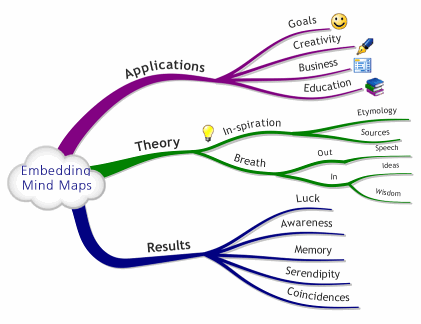
This version of the visualisation is more generic such that you can use it on any Mind Map whether hand drawn or computer generated. Note though, if you do use software Mind Mapping, it’s a good idea to use a print out first. This visualisation takes a Mind Map and embeds it into your cellular neurology such that two things start to happen.
Firstly, you commit it to memory much better.
Secondly that you become better at noticing coincidences and serendipities associated with elements on the map. For example, if your map contains your goals and ambitions for the year, you start to become luckier. If you are writing a book, you come across information and ideas that help you in ways that seem uncanny.
I do this before I do a talk. Firstly, I Mind Map the talk some days before and I seal it in my neurology at the time. Then just before I go into the event, I repeat the visualisation – works every time.




 There are two really common reasons why authors and bloggers get writer’s block.
 To deal with the second type of block, perceived lack of time, there are many excellent books on how to improve your time management. One I specifically recommend for authors is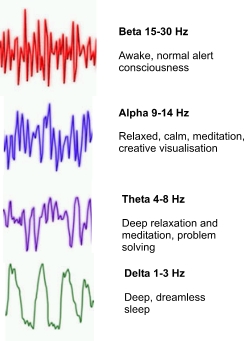
 Addendum: