Big Thanks to Lea Woodward and Jackie Walker for pointing me earlier this year at the most fabulous animation tool called Powtoon.
It allows ‘numpties’ like me to put together pretty amazing trailers for product and book promotions – there’s just a few examples below of what you can do with it.
And even better still, they have invited me to do a animation series on how best to communicate a message in Just a Minute … watch the trailer here
Powtoon Application #001 : Product Promotion
I prepared this short trailer to promote my Bending Time ecourse
Powtoon Application #002 : Web Site Landing Page
Here’s a trailer for a new web site for the marvellously talented Sue Warwick
I even used Powtoon to build a whole Udemy training course based on an earlier book called Flavours of Thought. This animation is just one of 30 in the course which comprise over 160 minutes of animated content – phew !!
Last year I wrote and published a book I had no idea I was about to write. I started writing it on the 3rd September and it was ready for publication on the 17th.
It shot into the top 10 books in Philosophy on the UK Kindle store by the end of September and the amazing reviews tell of the impact it is having on readers.
Here’s how I it came to pass …
Step 1: Have a Cracking Idea
I was watching my lovely partner snoozing on the sofa and wondered how many other people were also asleep right at that time. I also wondered how many people who were awake were also really ‘asleep’.
Step 2: Have an Immovable Deadline
I was presenting a workshop on creativity on the 27th September at Sadler’s Wells at the Transformational Media Summit and wondered if I could write a book with a big message – and get it published in time so I could use it as a case study for the journalists attending.
Step 3: Don’t Write a Big Book
To print a title and author name on the spine, you need about 100 pages or so. This equates to around 10,000-12,000 words. My aim was to write a book that could be read in a single commute or sitting.
Step 4: Learn How to Bend Time
I have been studying how we perceive the passage of time and I know some psychological and physiological ways to stretch time so we can get more done in less linear time. See Bending Time to find out how you can do this too.
Step 5: Write Short Chapters
A short chapter can be written and read in one session. What I do is meditate before each writing session for 20 minutes and I can then generate around 1000 words in an hour or so. The chapters in this book were actually around 500 words long so they could be re-syndicated in a blog.
Step 6: Review but Don’t Edit
Before writing each chapter, I review the previous chapter so I don’t duplicate and I ensure continuity and fluidity over the whole book. I only edit massive faux pas but don’t try and proof read or edit the whole. Incidentally, I normally Mind Map my books but this time it just came from ‘nowhere’.
Step 7: Know When To Finish
With epublication and print on demand, subsequent editions are easy. So when the 10,000 words or so are done and the base story is told, that’s time to wrap on this edition.
Step 8: Get Someone Else to Proof Read It
It’s impossible to mark your own homework so get professional, or a friend or colleague with an eye for detail, to read it and sanity check that it’s a Good Book and tells a solid story.
Step 9: Format It Nicely and Upload It to a PoD or ePub service
I use the CompletelyNovel print on demand service for my print books as it is so easy – and support is brilliant. Books normally arrive in 5 to 7 days. I uploaded it on the 17th of September and the box below arrived on the 20th in just three days!!
Step 10: Spread The Word
After finding a couple of other errors in the print books (so much easier than on screen), I uploaded it to the Amazon KDP platform and by the 21st September, it was available to download globally for less than the price of a cup of coffee. A few tweets and Facebook posts later and the reviews started flying in.
The greyscale display of the Kindle and some other e-ink readers, with their somewhat primitive formatting options, present somewhat of a challenge for book designers, publishers and authors.
There are however a few simple things we can do to create much fancier-looking, eye-catching and more readable books.
Note that I am no graphic designer and these tips won’t generate anything like a carefully crafted print book but they will make the book reading process more enjoyable for the reader.
Note too that the screenshots here are blatantly self-promotional from my own books – I am just practicing what I preach!
1. Judging a book by its cover
The book cover is the first thing that registers with our unconscious mind. Getting it right is key and both an art and a science. There has to be good contrast between any graphics or text and the title and author name has to be legible in a range of sizes.
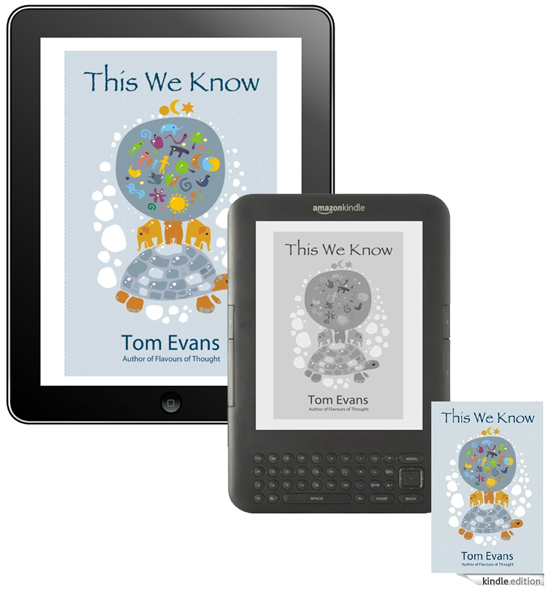
Tip 1 : make sure your cover works equally well on greyscale and colour devices – and in thumbnail
2. Table your contents
With no pages to thumb through, we have to give the reader an easy way to navigate around their books. Including a hyperlinked table of contents is not a nice-to-have or option but a given.
Tip 2 : get a copy of Scrivener which not only generates all ebook formats but also generates hyperlinked tables of contents
3. Use graphics for chapter titles
Use a graphic for each chapter title (and any quotes)
Use an image and graphics to tell part of the story and augment the text, making sure that you follow guidelines for image resolution. Use colour where possible than renders well in greyscale. Also make sure you check copyright and I’ve listed the photo libraries I mainly use below.
Tip 4 : use the free Kindle Previewer to check your graphics in colour and greyscale and on a range of devices
5. Keep it short and consistent
Make chapters roughly the same length and use sub-headings to break long chapters into chunks. This works best for non-fiction but can apply to some fiction too.
If you have ever been stuck in front of your computer with words not flowing, there’s a good bet it’s your head that’s in the way.
When we allow our conscious mind to take a back seat, a certain magic unfolds – we get in flow and become what is known as ‘a channel’.
Next Thursday the 8th November at 7pm GMT, I’m honoured to be taking part in the Writing from Your Heart series of teleseminars with Eileen Parr.
I’ll be lifting the lid on what channelling is, and isn’t, and how it’s not about talking to the “Dear Departed” – it’s a natural process we all do from time to time. When we learn to do it under volition, our creativity and productivity soars.
Every once in a while I even surprise myself. None more so than when on holiday recently I wrote a whole book (admittedly a short one) that I had absolutely no intention in writing.
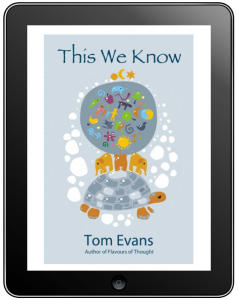
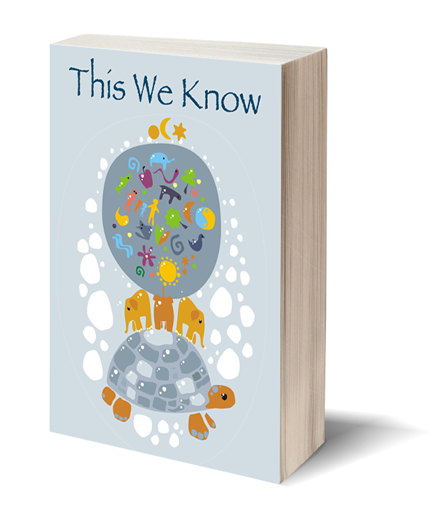
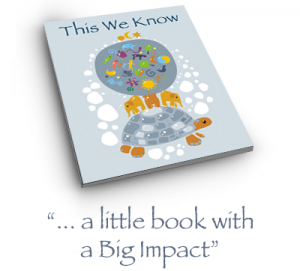
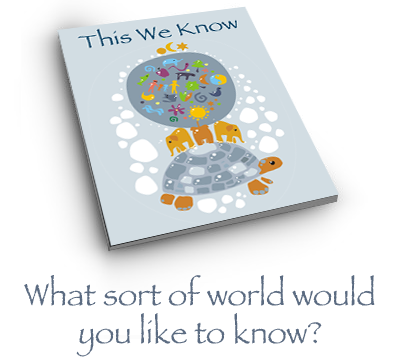
This We Know is an exploration into what we know and what we don’t. Furthermore, it explores how we can go about not only gaining new knowledge but how to define our own reality.
It didn’t take long to write; it doesn’t take long to read – the aim though is that it will change your world and the world around you for ever.
I started writing the book on the 3rd September and thanks to CompletelyNovel and Vook, it was published on the 18th September – and available worldwide by the 30th September.
“I downloaded this book yesterday on my iPad and have read it twice. An extraordinary book that takes us on a journey of what as a society we ‘need to know’. The postscript gave me goosebumps of excitement. For me it sets out a vision of what we could be as a society if we as individuals let go of our ego. It is a manifesto for our future. Like any great book it asks big questions, pokes our thoughts and tramples on our preconceived beliefs about humanity. It transported me back to being a child reading Arthur C Clarke and mind expanding possibilities. Tom Evans is a visionary and I hope that everyone jumps on board the party in the sky.” – Dr Linda Mallory, Founder of The Why Parent
“Wow! Tom Evans the wizard has done it again! I am half way through his latest book, and even though I probably could have gone through the whole thing in about 30min, I am stopping, pondering, loving it. It is simple, factual yet provoking. Chapter 10 is soooo spot on! As a scientist myself, it triggers memories of my times in research labs when I use to think to myself what’s the point of this since just imagining the results I want will make them happen. So cool to see a very wise man share that very thinking. Highly highly recommended!” – Dr Claire Gaudry, Author of The Power of True Learning
The book is available from all the usual outlets …
I am so honoured that author and poet Christine Miller invited me, together with a hand picked group of British authors, to take part in this great initiative.
It’s ‘A Very British Blog Tour’ which visits and supports the websites of some authors who are dedicated to turning out some of the finest books available in Britain today.
Each author named at the bottom of the page has asked been asked the same questions, but the answers will obviously all be different. You simply click on the author’s name below to see how they have answered the same question.
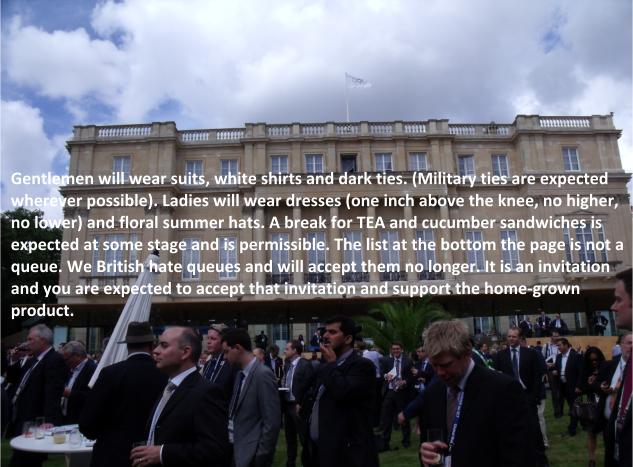
By the way, we British have certain conventions, traditions and procedures that are expected. There is a dress code in the reading of this British blog and you are expected to comply with it. For example…
Now then, let us proceed in an orderly fashion. As you know, we are all very boring and staid in Britain, aren’t we?
Well, there’s a myth about the British and your starter for ten is – stuffy, class conscious, boring, staid! But is this still relevant in today’s world? Let’s find out from our wonderful writers what they feel about it.
So, without further ado, here are the questions and answers from:
THE VERY BRITISH WRITER: Tom Evans
Q. Where were you born and where do you live at the moment?
A. I was born in Moss Side in Manchester when it resembled the opening titles of Coronation Street. I now live in the Surrey Hills with my life partner and two dogs who take me for a walk whenever they detect I am need of inspiration.
Q. Have you always lived and worked in Britain or are you based elsewhere at the moment?
A. Apart from loads of business travel during my early career in broadcasting, I’ve always been here.
Q. Which is your favourite part of Britain?
A. The south escarpments of the North Downs of Surrey looking towards the South Downs. This is handy as they are a mile or so from my house.
Q. Have you ‘highlighted’ or ‘showcased’ any particular part of Britain in your books? For example, a town or city; a county, a monument or some well-known place or event?
A. As most of my books are non-fiction, geography of anything but the mind doesn’t feature. My first ever book of poetry, 100 Years of Ermintrude, however did include these two stanzas:
“Brian I’ve decided has got to go I’ll miss his flat & friends in Pimlico”
“I never thought I’d ever live in Tring A mother of two, now there’s a thing”
p.s. I’ve never lived in either place myself, been a mother of two or had a boyfriend called Brian!
Q. There is an illusion – or myth if you wish – about British people that I would like you to discuss. Many see the ‘Brits’ as ‘stiff upper lip’. Is that correct?
A. I see British people mostly as courageous innovators who are brilliant in both the arts and sciences but who also possess a keen sense of humour and healthy level of self-depreciation. In my opinion, any lack of flexibility in the upper lip is a stereotype which is best confined to history books and films about the various wars.
Q. Do any of the characters in your books carry the ‘stiff upper lip’? Or are they all ‘British Bulldog’ and unique in their own way?
A. Ermintrude was (or is) indomitable.
Q. Tell us about one of your recent books?
A. I wrote and published my latest book, This We Know, in less than three weeks. I didn’t plan to write it, it just happened. It is a meme exploring what we know, what we don’t know and what world we could know. I’m in discussions about making it into a documentary and would love to interview people about the world they would like to know.
Q. What are you currently working on?
A. I have started writing the third in a trilogy which takes esoteric and arcane knowledge and makes it exoteric and contempory. The first two books explored the meanings behind the Major and Minor Arcana of the Tarot. This book with the working title of Leaving Cubeland will explore and explain two glyphs, The Tree of Life and the Cube of Space.
Q. How do you spend your leisure time?
A. As I love the ’work’ I do, I don’t switch between one mode and another. Neither do I ’spend my time’ as such – if anything I bend, shape and morph it into intriguing shapes. I just love riding at 66,000 miles an hour on Spaceship Earth.
Q. Do you write for a local audience or a global audience?
A. Definitely global and any passing aliens who tune in when they are flying past.
The Next Big Thing is a meme initiated by other authors which encourages typically self-effacing writers, like me, to BIG UP their work and share why we wrote it.
If you are an author and want to join in, all you have to do is write a blog with this title answering the questions that I have below. Then tag other authors, like me, who are joining in with the programme.
My tags below …
1) What is the working title of your current/next book? My current book is entitled This We Know. My next book is completes a trilogy taking the esoteric and making it exoteric. The working title is Leaving Cubeland.
2) Where did the idea come from?
The idea for the current book came from watching my better half snoozing on the sofa and wondering how many other people on the planet were asleep right at that time. This then led me to ponder how many people who were actually awake were in some kind of waking sleep.
3) What genre does your book fall under?
Philosophy and futurology.
4) What actors would you choose to play the part of your characters in a movie rendition?
It’s non-fiction (apart from the Postscript 2112), so I would like the documentary version of this book to be narrated by the Lord of the QI Elves himself, the supremely knowledgeable Stephen Fry. It would be an exploration of our amazing knowledge and our amazing lack of knowledge in some fundamental areas. It would also ask people from all walks of life what sort of world they would like to live in.
5) What is the one-sentence synopsis of your book?
There is an infinity of things that we don’t know compared to what we think we know.
6) Will your book be self-published or represented by an agency?
I started writing the book on the 3rd September 2012 and had the printed books in my hands on the 21st September. It was available worldwide for ereaders on the 22nd September. Self publishing was the only option. Note I prefer the term indie publishing though. This is one of the beneficial byproducts of being able to Bend Time.
7) How long did it take you to write the first draft?
Less than two weeks. Note I teach the different-ability to tap into our future self to get the words we have yet to write. For this reason, the first draft was also pretty much the final draft.
8) What other books would you compare this story to within your genre?
Unashamedly I’d compare it with some of Seth Godin’s disruptive thinking and one reviewer compared the writing style to that of Richard Bach.
9) Who or what inspired you to write this book?
A medium sent me a poem that had been given to her specifically for me. It’s called the Journey of the Secret Man. Two days after I received it, the book just flooded in.
10) What else about the book might pique the reader’s interest?
This short video was specifically put together to pique interest.
Other Next Big Things
Here’s some of the other author’s answers to the same questions …
You would be forgiven to think that someone who has published eight books on Kindle would know all that there was about publishing and Amazon’s KDP platform.
Well let me disavow you of that notion.
Sure I know how to write a book, format it and upload it for sure but when it comes to book promotion, I confess that I pretty much make it up as I go along – I am still learning.
Now I had pretty good initial success with my latest book, This We Know. A month after I wrote and published it (incidentally which took less than a month), the book got over 30 reviews [UK & US] and not a bad ranking in the charts in its genre.
Since then, like many books, it’s been sliding down into the Amazon noise floor. Like many authors, I was getting despondent and wondering what to do and what I was doing wrong.
Finding Udemy
Then out of the blue, I had an email inviting me to look at Udemy. Less than a month later, I had uploaded three of my own courses – see here … but then a real bonus came in.
I started to connect with other fabulous instructors and to discover their marvelous course materials. One that jumped out and grabbed me straight away was Cathy Presland’s course – Publish Your Book on Kindle
Not only does it cover everything you need to know about formatting your book, which is great if you haven’t done it before, but there’s a whole load of really useful information for “old hands” like me on selling and promotion.
I’ve only implemented a couple of the tips this weekend and already sales have started to come in again – eternal thanks Cathy.
I love too the way you share success stories of your students –you are a god send to all authors.
Five Things I Didn’t Know About Publishing on Kindle
How to get eyeballs on my book
How to do a proper Best Seller campaign
How I am not the only one to have made mistakes in the past, so not to give myself such a hard time
How to get people to sign up to your email list from your book – courtesy of Steve Reeves
How it can lead to creating passive income from your writing & blogs – courtesy of Tom Ewer
So whether you are a new author starting out or an existing author, this course should be high on your list of investments this year.
p.s. I am only recommending this course because I purchased it myself.
p.p.s. This is an affiliate link so there is a revenue share for me if you decide to purchase it too. I am pointing this out because if you like the course, as much as I did, you can do just the same.
If you haven’t been sitting in a cave, you may have noticed the world seems to have gone Digital all of a sudden. We have a Digital Economy, a Digital Minister and even the new self-proclaimed job title of Digital Coach.
Many of the people who use the word carelessly don’t have a clue about binary or hexadecimal mathematics or the difference between a bit or a byte.
These so-called digital initiatives, while all laudable, are somewhat missing the fact that the Internet is essentially an analogue system that operates on a digital backbone.
Let me explain …
This digital backbone of data transmission and storage controlled by software that operates on digital processors has hardly changed in essence since the Internet’s forefather of the Arpanet in the ’60s. It’s somewhat surprising then that everything’s suddenly gone Digital – especially when all our interactions and all the exciting developments are mainly happening in the analogue domain.
In the Web 2.0 world especially, where user generated content is the contribution currency, all the inputs and outputs are analogue.
These words that I am typing are analogues of my thoughts although, maybe somewhat ironically, input by my digits.
If I record a podcast, I am storing a representation of a waveform of analogue sound waves modulated by my voice box.
Still and moving images are an analogous simulacrum of the light reflecting from objects in view of the camera.
The screens on which we write, interact, read and view are all analogue devices – especially e-ink displays.
The loudspeakers and earphones are all analogue too.
If you take the iPhone what you have in your hand is a device packed to the gunnels with analogue transducers all controlled by digital processing. It responds to touch, voice, image, xyz position and even acceleration.
Digits although important are just one component, not the total picture by any means.
I have no objection or axe to grind here … merely to point out that a spade should be called a spade or holes might be dug from which the true picture can’t be seen or the trees seen from the wood.
Afterthought: With the widespread adoption of phones and tablets where touch is the primary input, there could be merit in joining a Digital Gym where our fingers get a workout to keep them dexterous and avoid RSI of the forefinger! Now there’s an idea for an app …

 Big Thanks to Lea Woodward and Jackie Walker for pointing me earlier this year at the most fabulous animation tool called Powtoon.