If you have an important message you want to share with the world, how do you go about it?
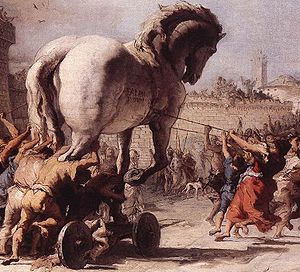
The answer lies in writing a literary Trojan Horse using metaphor and story telling. The acknowledged masters in this art I strive to emulate are Paulo Coelho and Deepak Chopra.
The secular and the cynic might shy away from the Mind, Body, Spirit section of a bookstore – be it online or in the High Street.Sometimes this is for good reason as the writing can be inaccessible or a little preachy. Spirituality in general can also be ethereal in nature with no tangible real world benefits.
Let me share how I’ve been going about it.
When I wrote my first book, 100 Years of Ermintrude, I was told that I was channelling my work. My first reaction was to say, “Don’t be stupid, I’m not a medium.”
When I looked into it some more, I discovered channelling is really just getting your conscious mind out of the way so another form of consciousness can come through. The external consciousness may well be a dear departed spirit but can also be your guide, fairies at the bottom of the garden or even your Future-Self. I even teach how to do it now on my workshops and show how you can even channel the chair you are sitting on.
It turns out to be a great way to access your Creative Muse and is essentially what all the literary, artistic and musical greats have done down the years.
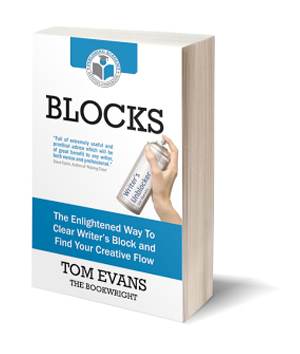
So when I wrote my first non-fiction book, I thought it would be a good idea to write about channelling but to open up the ideas to a new audience – to all writers and creatives. The book turned out to be ostensibly about writer’s block – it is even simply called Blocks – and was published by a non-MBS publisher.
By writing about things that stop your Muse coming through, you cannot help but touch on topics that would appear in a book on channelling such as the collective consciousness, higher self, karma, the importance of breath and even the food you eat.
It even promotes, without mentioning it explicitly, the practice of active channelling where the author is in the loop and adding value and context. The book though doesn’t appear in the MBS section.
For my next trick, I had the idea that it would be great to introduce a new audience to the magic and wisdom of the Major Arcana of the Tarot.
So I wrote Flavours of Thought which explains the essence of each key in simple contemporary language with no baggage. Furthermore it shows how triplets of cards can be combined into recipes to tackle many common and real world issues and opportunities.
In some ways, it’s a book of spells but without the baggage of any arcane ritual.
I managed to pull this off without mentioning the word Tarot once. The references are all there for those who want to learn more.
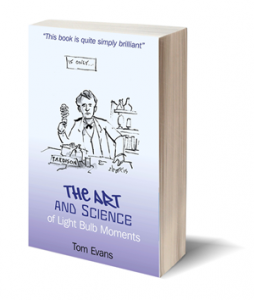
My latest work published by O-books in 2011 is ostensibly about how to have light bulb moments on demand.
Guess what though? It’s really a book on how to prepare for ascension into the new awakened consciousness and merged mind. It is written to be read by business people, entrepreneurs and scientists as well as the spiritual awakened. By reading the book and following the exercises, you will raise your vibration and become a transceiver for the Light. I don’t of course use this type of language in the book.
Of course, you will also have loads of blindly good ideas you can use in your personal and business life and learn how to have the on demand and not at random!
The common themes of the work is to fabricate real world applications from spiritual practices. I call it making the esoteric into the exoteric – that is taking the unknown, occult and hidden into the known and understood.
I should also mention that each book was simultaneously published in print and for the Kindle, iPhone and iPad. They are also augmented by audio tracks to help get the reader into the perfect state of consciousness. I also merge words, video and audio into Enhanced Edition books and ecourses too.
Has this overall tactic worked you may ask?
Well the results for me have been the opening of new doors, new business opportunities and dialogues with those that have been searching for answers but want them delivered in a contemporary context.
There’s a number of new authors who are now happily writing and being published with a new and strong connection with their Muse. I find that spiritually aware businesses approach me and we can use spiritual practices such as channelling, timeline entanglement and manifestation in the board room … as well as the odd bit of magic.
This particular ‘horse’ is now riding on to the next project … the emergence synthesis of a new mode of consciousness, being and doing. I may choose to write the next book though with gloves off.
The first review for this book from the editor at O-books said, “This book is quite simply brilliant.”
This is kind of expected as tapping into our innate brilliance is what this book is all about and, most specifically, how to do it simply.
The Art and Science of Light Bulb Moments is an interactive, educational and entertaining guide on how to have ideas on demand. In it I explain how the mind works (and doesn’t work) so you that you can experience inspirations about anything pretty much any time you like.
Light bulb moments don’t have to be random.
You will learn the secrets to Whole Brain and Whole Mind Thinking, the importance of the breath and how to reconnect with your vestigial minds and the superconsciousness. Find out where ideas come from and why most thoughts aren’t necessarily your own.
Reading this book will quite possibly change your world by helping you spot serendipities, making you luckier and even healthier and wealthier.
List of Contents
Part 1: The Art
1: What is a Light Bulb Moment?
2: What stops Light Bulb Moments?
3: Maps in Your Mind
4: The Devil on Your Shoulder
5: Re-minding yourself
6: Collective Thoughts
7: The In-Spirational Breath
8: Ordering your Dreams
9: Flavours of Thought Part 2: The Science
10: The Cascade of Creativity
11: Getting in Sync
12: The Importance of Grounding
13: The Chasm
14: The Wisdom of Growds
15: Managing Ego
16: The Future’s Bright
17: Magic Moments
18: A Whole New Mind
For more insight of how this book is being received, here’s the early endorsements:
“Creativity is one of the mind’s most mysterious processes, long thought to come and go of its own volition. But in this insightful book, Tom Evans unlocks some of the mystery and he shows that this isn’t the case. This is an insightful book which uncovers some of the mind’s mysterious creative processes. Tom Evans shows us how we can create the right conditions which enable insight and inspiration to arise, so that don’t just have to wait for them. A very practical and accessible guide to uncovering your mind’s potential.” Steve Taylor, Author of Waking From Sleep and Making Time
“Tom Evans shows how everyone in a team can be encouraged to have light bulb moments which can be used throughout the entire product life cycle” Mike Southon, Financial Times columnist and best-selling business author
“What a wonderful tool and resource for tapping into our creative muse anytime, anyplace. Written in an accessible style this book is for anyone who wants to take an idea from inspiration to manifestation.” Davina MacKail, Author of The Dream Whisperer
“Like Tom himself, ‘The Art and Science of Light Bulb Moments’ works powerfully and effectively on many levels; it is well-written, inspiring,practical and like a breath of fresh air for the heart and mind. If you put into practice only a fraction of the rich resources on offer in this book, you will transform your own life, and quite possibly that of many others, too. Read, digest, do – and be sure to send a copy to everyone you care about.” Christine Miller MA FRSA, Editor of ReSource Magazine & ‘Secret Garden of the Soul’
“A very nifty little book for Entrepreneurs wanting to learn how to harness the power of our ideas. It’s arty, scientific and magical and much, much more useful and inspiring than Dragon’s Den!” Judith Morgan, Entrepreneur, www.JudithMorgan.com
When I hear the word optimist, I am reminded of the phrase, “an optimist is a pessimist not in possession of all the facts.”
When I first heard this I laughed and have ‘dined out’ on it more than once when the word comes up in conversation. I confess to being a born optimist – something I inherited from my mother who always sees the bright side of everything.
On reflection though this phrase could be seen to show optimists in a dim light. It could be inferring that optimists are dreamers, Walter Mittys and that blind optimism is no more than wishful thinking.
Optimists will always see a glass as half full. Pessimists see it not just as half empty but containing a liquid which is distasteful or even poisonous. Yet sometimes optimists can become the target of those with a cynical disposition.
Well I think that such blind optimism does lead itself to being open to criticism but it has too much of a bad press. To redress this situation, it’s time that we got a bit scientific about it. So much so that I’ve coined a new term called Optimology. In fact I am really optimistic about this word as I Googled in and found nobody is using it for anything of relevance. This means that as soon as this article is published and I blog it, these viewpoints will even be on top of Google within 24 hours.
It is this type of ‘creative’ optimism that the word refers to. If you simply take an optimistic view and do not act upon it, you will have a better life than a pessimist who will simple manifest the ‘not so good’. If you take an optimistic view and act upon it, you will have a Great Life. To ensure your optimism grounds into physical reality, it is important to use the Cascade of Creativity.
The first step towards such greatness is to back your optimism with high intent, not just wishful thinking. For example, by simply coining this term I have the seed of an Inspiration to start a new movement training professional Optimologists who teach these principles. When enough people think differently, Mother Earth tilts her axis in recognition.
The next step is to Dream where this might lead to. Imagine a world where companies employ Optimology consultants or even have one on the Executive board. For each corporate action, only the positive spins will be sought. I was trained to faciliate meetings a few years ago with a wonderful tool called Appreciative Enquiry. In it you simply discover what works well and just make it work even better. No time is spent navel-gazing or on the Blame Game. Egos aren’t supressed but harnessed and pointed in the right direction.
In Appreciative Enquiry too, the outputs of the dream phase are then managed. This is the next crucial step in the Optimology process. Before acting wildly and running off with unbridled excitment, desired outcomes are defined and tested in an Evaluation phase. So to take Optimology to the next phase, I throw the gauntlet down and ask any trainee Optimologists to get in touch. Collectively we will define a training and testing programme to see where this can go. From which we can set some goals – they will be high ones. As I know already this works, all activity will be synced to the Moon Phase.
Finally, there comes Action. My first action is to write this article and broadcast it. There will inevitably be the book to be written on the subject and all the training manuals. If this is to be, I know the right team will materialise so that this won’t just fall on my shoulders. My role is as creative spark – and CEO. Where CEO stands for Catalystic Evangelist of Optimology.
Now my ever present optimism has already created a Pretty Good Life for me. I have no desire to ‘own’ this movement or even to lead it. This is a call to action for all of an optimistic disposition out there to come together to make a change. This is no new religion and the dogmatic need not apply. The philosophy will be freely available and distributed. Revenue will generated only where Added Value is delivered.
“Truly, food for thought. I really enjoyed chewing over the contents.”
Flavours of Thought started as a chapter in the light bulb book and has spawned into a book in its own right. Not only that but the most amazing sequels to Flavours are coming along too … watch this space.
It is a book of transformation.
We go about our days not giving our thoughts a second thought. This is a real shame as our thoughts fundamentally changes the world around us.
In Part 1 of Flavours of Thought, our thoughts processes are divided into groups of three, namely Ethereal Whispers, Unconscious Murmurs and Directives. Each group is then further divided into seven flavours.
By thinking about our each of our thoughts as having one of these 21 flavours, a transformation happens. We start to realise we are not a slave to them anymore and they will yield to our will and direction.
Part 11 of the book, Recipes for Fresh Thinking, then shows how these 21 flavours can be combined into 21 sample recipes (there are billions of other permutations) to tackle common issues like self-anger all the way through to finding your soul path.
The simplicity of this book belies its power as it is crafted from ancient wisdom but in a modern context.
“This book is intrinsically simple. Simple to read; simple to understand; simple to apply. Its simplicity is what makes it genius.”
Published using CompletelyNovel
I have used the most amazing new site to publish the print version called CompletelyNovel. It took just a few hours to go from Word document to published book.
Their model is to allow readers to read the whole book online for free, much as you would browse a book in a bookshop – and you can do this here
This is one book you will want to own however though and you can get it here online and order it in bookshops …
For those of you with ereaders or smartphones, the book is also available via the Amazon Kindle store for the Kindle, iPad, iPhone, Android and Blackberry.
In fact, the book has been written with the iPhone in mind and it is optimised for reading on the small screen.
See the Flavours of Thought Facebook page more recipes and new flavours.
List of Contents
Preprandial Part 1: Flavours of Thought
– Strangeness: Ethereal Whispers
– Charm: Unconscious Murmurs
– Direction: Who’s Driving The Bus? Part 11: Recipes for Fresh Thinking
– Starters: Recipes 1 to 7
– Main Courses: Recipes 8 to 14
– Desserts: Recipes 15 to 21 Postprandial: The Obvious
See what readers are already saying about it …
“Oh my you are brilliant with your wit and insight!” – Tim Johnson, Director of Strategy, 4Networking Ltd
“Anti-perception is an intriguing concept and just on of the may gems to be found in Flavours of Thought which is a delightfully simple journey into personal development. The book can be used to build a much larger and more powerful framework that I believe hints at an even greater innovation which surprisingly is not often found in the personal development industry. I thoroughly recommend you read it and judge for yourself.” – Bill Liao, Founder of WeForest.com
“It is the deceptive power in its apparent simplicity which allows Flavours of Thought to be easily accessible to both beginners and time served devotees of personal development work. The book is cleverly engineered and crafted to produce light bulb moments (or understanding) whether it’s being read cover to cover, dipped into randomly or as an aide memoir when required. I do all three …. often!” – Jackie Walker, Edinburgh
“It’s brilliant! I love the idea of thinking about thoughts in a way that encourages my intuition, without embroiling me in my intellect.” – Kuumba Nia, author of The Circle of One
“Through gaining an understanding of the flavours in my thought process and applying the recipes I am now positively dealing with being hurt and rejected and using them to remove frustration and to find my soul path. I have applied recipes to my business, to my writing and to the way I chose to live. As a result, I can now see that in every situation I have a glass half full mentality, where before there may have been despair. This is one inspirational, magical and thought changing book that has the power to change your very being.” – Mike Smith
“This book takes personal development it to a different level. No stuffy 50 year old theories that people still hang their hats on. Refreshing, thought provoking and inspirational.” – Anita-Clare Field
Wearing my hat of the Bookwright, I have been talking for a while now about how a book becomes your best business card …
With my book Flavours of Thought, I have surpassed even my own expectations [and advice] and it has lead me into a new area I simply hadn’t planned.
For starters, I didn’t plan to write this particular book last year – it just kind of happened. It was inspired by an eponymous chapter in my book on light bulb moments. In addition, I had for a while being studying the Major Arcana of the Tarot and wanted to write a lay person’s guide to it.
The two themes came together perfectly and the book ended up ‘writing itself’ during a single month last August. I opened my email after finishing the very last recipe in the book only to find a message from a new publishing service called CompletelyNovel. Within a couple of short weeks, I ended up with the book in print and available worldwide for download from the Amazon Kindle Store.
Now that would be a good result for most people in itself – and it was for me too – but the Universe wasn’t finished with me yet. By the time the year was out, I had a training course running teaching people how to concoct their own recipes …
… AND a 1-2-1 karmic mentoring programme that takes people on a tour of the flavours called the Cube of Karma.
To find out more, have a listen to Jackie Walker, the first trained Master Chef on her experience of it all …
Blocks is an easy to follow guide to unlocking your true creative potential.
This practical and comprehensive book takes you on a journey of the mind to help you banish your blocks forever and tap into an abundant flow of inspiration and creativity.
This book is for anyone who writes regularly, whether professionally or for pleasure. Nearly everyone will at some point have found themselves unable to get into their creative flow and achieve the literary results they are looking for.
‘Blocks’ explains why we get stuck and how to get unblocked. It is available in ebook form and, optionally, with 6 guided MP3 visualisations designed to get your creative juices flowing.
Note that although ‘Blocks’ was written primarily for authors, it can equally be used by artists, musicians and any one involved in any creative process.
List of Contents
So Why Write A Book?
Making Time To Write
Getting In The Groove
So What’s Stopping You?
Mapping Your Mind
Whole Mind Not-Thinking
The Superconsciousness
Becoming Fear-less
Vestigial Minds
The Physicality Of Inspiration
Food For Thought
Using Dreamtime
Reader-Centric Writing
Expanding Time
Writing In Trance
Being An Author
Putting It All Together
Voiding Karma
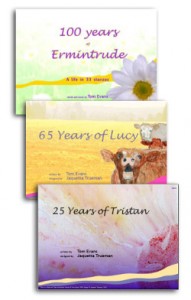
100 Years of Ermintrude is a book of meditative poetry and my first real foray into the world of publishing. It comprises three intertwining life stories and is told in just 99 stanzas. Although it can be read in less than an hour, it’s something that will stay with you forever and you will want to read again.
Find out why this story is making grown men cry, mothers smile and children laugh and one man said, “Stunning. I cried. That’s all.”
“Inspiring, moving, emotional, poignant and full from cover to cover with the most amazing energy. Thank you Tom. I am a different person for having read 100 Years of Ermintrude.” “Truly a touching piece of work and artistry wonderfully complimented by the guitar music. Thought provoking to the extent I just wanted to ‘hug’ someone.”
‘Ermintrude’ started life as a PDF and morphed into an MP3 download and MP4 Jackanory-style video before I wrote the two sequels and made it as an author in print for the first time.
If you have an iPhone you can get a full multimedia version of the first story in the trilogy which will make a commute fly by here.
Blogs that list “things” are some of the most popular and retweeted blogs on the Interweb. Like all these things, there are some do’s and some don’t.
Here’s my top seven tips:
1. Make sure the title is snappy, contains a pun or humour and even try and make it rhyme – kind of like this one
2. Go for something that’s topical – e.g. iPad, Ryder Cup
3. Seven is the optimum number as most people can (just about) hold seven things in their short term memory
4. If you have to list more than seven either rank them – e.g. Top Ten in order of popularity – or group them
5. For grouped lists, three is a brilliant number – e.g. Good, Bad and Ugly or Top, Middle or Bottom
6. Three and five are also good numbers, especially when the list have equal weighting like an equilateral triangle or five pointed star – your 3, 5 or 7 points can also form an ACRONYM or MNEMONIC so the list can be remembered more easily
7. Make sure you end with an invite for others to add their thoughts to the list as I am doing now … please add your tips below
If you want to know more about the psychology of writing brilliant blogs with eye catching and brain-catching headlines, come along to the You Only Have 1 Second series of workshops – details here

 If you have an important message you want to share with the world, how do you go about it?
 So when I wrote my first non-fiction book, I thought it would be a good idea to write about channelling but to open up the ideas to a new audience – to all writers and creatives. The book turned out to be ostensibly about writer’s block – it is even simply called Blocks – and was published by a non-MBS publisher.
 For my next trick, I had the idea that it would be great to introduce a new audience to the magic and wisdom of the Major Arcana of the Tarot.
  My latest work published by O-books in 2011 is ostensibly about how to have light bulb moments on demand.
  When I hear the word optimist, I am reminded of the phrase, “an optimist is a pessimist not in possession of all the facts.”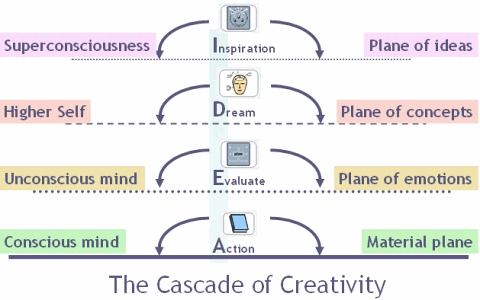


 Blocks is an easy to follow guide to unlocking your true creative potential.
 100 Years of Ermintrude is a book of meditative poetry and my first real foray into the world of publishing. It comprises three intertwining life stories and is told in just 99 stanzas. Although it can be read in less than an hour, it’s something that will stay with you forever and you will want to read again.
 Two ways to get 100 Years of Ermintrude: